
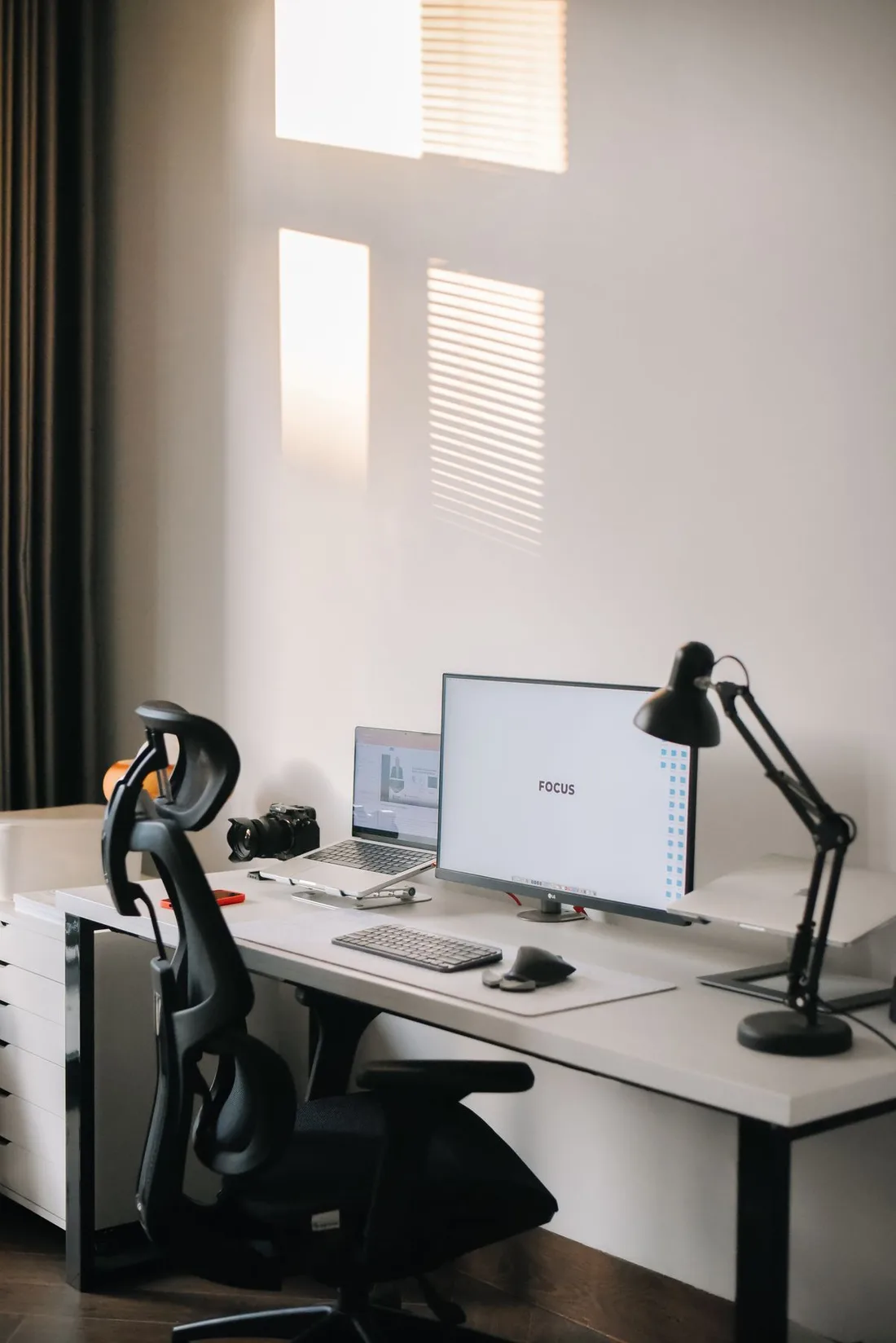
Long hours at a desk do not have to mean a sore neck and tight back. These five everyday habits are the ones we see most, and each has a simple fix.
Most desk-related aches do not come from one bad moment. They build slowly from habits that feel harmless: the same position, held for hours, day after day. The good news is that small changes add up quickly.
1. Staying in one position for hours
The best posture is the next posture. Set a gentle reminder to stand, walk to the window or refill your water every 30 to 45 minutes. Even a minute of movement resets tired muscles.
2. Craning towards the screen
When the screen sits too low or too far, your head drifts forward and your neck takes the load. Raise the screen so the top third is at eye level, and sit an arm’s length away.
3. Perching on the edge of the chair
Sitting forward with no back support makes your lower back work all day. Slide back until your hips touch the backrest, keep both feet on the floor and let the chair carry some of the effort.
4. Working from the sofa or bed
A soft surface lets your spine slump into a rounded curve and your laptop sits too low. If you must, use a cushion behind your back and a firm surface for the laptop, and keep these sessions short.
5. Hunching your shoulders towards your ears
Stress and concentration quietly lift the shoulders. Every so often, drop them down and back, take a slow breath out and let your arms rest by your sides.
When to get it checked
If stiffness keeps returning, or you notice pain that spreads, tingling or numbness, an assessment can find what is driving it and give you a plan that fits your own desk and routine.
This website provides general information, not a diagnosis or personal medical advice. A qualified healthcare professional should assess your symptoms and advise on suitable care. Seek urgent medical attention for sudden weakness, loss of bladder or bowel control, chest pain, or other severe new symptoms.