
5 desk habits that are hurting your posture
Long hours at a desk do not have to mean a sore neck and tight back. These five everyday habits are the ones we see most, and each has a simple fix.
Read more: 5 desk habits that are hurting your postureDesk workers & professionals
Hours at a laptop or on a phone can leave the neck sore, stiff and tired, a pattern often called tech neck. At our Opera House clinic we look at how you work as much as how your neck moves, then plan changes that fit your day.
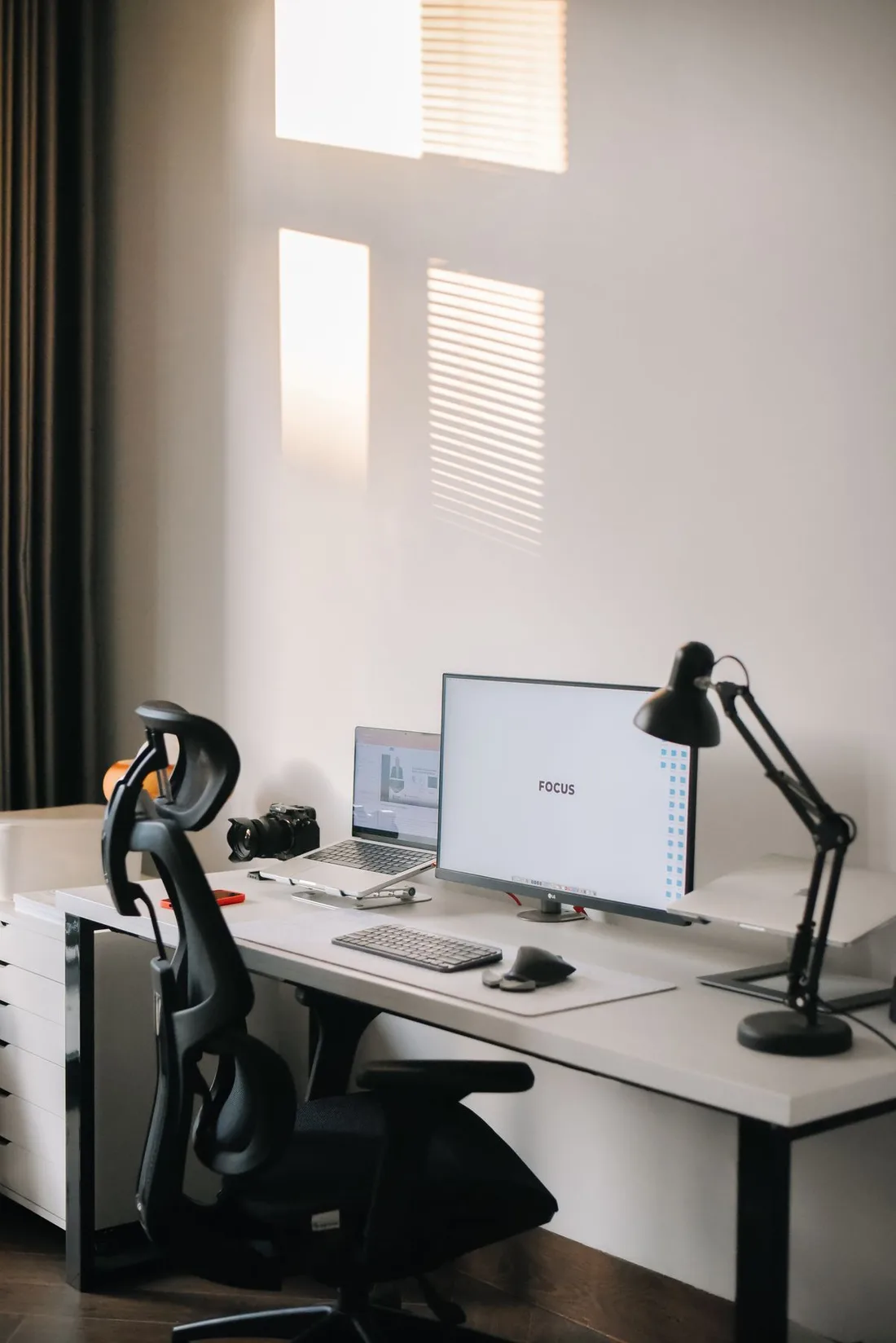
Desk-related neck pain is neck discomfort that builds with sustained screen work. The head weighs several kilograms, and when it sits forward of the shoulders for long periods, the muscles at the back of the neck and upper back work harder to hold it.
Over days and weeks this can lead to tightness, aching and headaches. The pain is usually a sign of overloaded, tired tissue and not of damage, which is why it often eases when your set-up and routine change.
This page is about work habits and set-up. If your neck pain is not linked to desk work, or if it has other features, our page on neck pain covers the wider picture.
We start with your working day: the hours, the devices, how long you sit between breaks and when the pain is worst. Then we examine your neck, shoulders and upper back, and look at how you sit while working.
Our plan uses a mix of set-up changes, movement and strengthening, so you are not relying on treatment alone.
Raising your screen towards eye level, using a separate keyboard and mouse with a laptop, and adjusting your chair and desk.
Simple ways to hold your phone higher, use voice features and avoid long spells with the head bent down.
Gentle neck, shoulder and upper-back movements that take less than a minute and can be done at your desk.
Progressive exercises for the deep neck and shoulder blade muscles so the neck tires less during the day.
Gentle soft-tissue and joint techniques for the neck and upper back, to ease tension while the habits change.
If assessment points to fascial tightness around the neck and shoulder girdle, we may use it as part of your plan.
Read about this techniqueThis is for people who spend much of their day at a laptop, desk or phone and notice neck pain that follows their working pattern. We make no promises of cure, and we will tell you if your symptoms point to something that should be seen by a doctor first.
It is a popular term for neck pain and stiffness linked with looking down at phones, laptops and tablets. It is not a medical diagnosis, but the pattern is common and usually responds well to changes in habits and strengthening.
The top of the screen should be roughly at eye level so you look slightly down, not far down. With a laptop, a stand and a separate keyboard make this possible.
It can help by changing position, but standing still for hours is not better than sitting still for hours. Alternating positions and moving regularly matter more.
There is no single rule. Changing position and moving for a short moment every half hour or so is a useful aim. We help you find a pattern that fits your meetings.
Usually not. We look at what you have and suggest changes first. If something needs replacing, we tell you what to look for.
Most people can, with changes. We help you adjust your set-up and routine so work is not making things worse.
The treatment overlaps, but here we focus on the work pattern behind the pain. If your pain is not clearly linked to desk work, our neck pain page may fit better.
Your physiotherapist
Dr. Akshay Bandekar is the founder of The Posture Perfect Physiotherapy Clinic.
Qualifications: BPTh, MIAP, COMT
Advanced training: Visceral Manipulation (USA), Fascial Manipulation (Italy), Craniosacral Therapy (USA)
Meet the teamBook an assessment at our Opera House clinic and we will plan your care together.
This website provides general information, not a diagnosis or personal medical advice. A qualified healthcare professional should assess your symptoms and advise on suitable care. Seek urgent medical attention for sudden weakness, loss of bladder or bowel control, chest pain, or other severe new symptoms.
From our journal
PostureLong hours at a desk do not have to mean a sore neck and tight back. These five everyday habits are the ones we see most, and each has a simple fix.
Read more: 5 desk habits that are hurting your posture Back Pain
Most back pain settles on its own, but not all of it should be left to. Here is how to tell what can wait, what to get checked, and what needs urgent care.
Read more: When should you see a physio for back pain? Neck & Shoulders
Four gentle stretches you can do at your desk in a few minutes to ease a tight neck and shoulders, with simple pointers on how to do them comfortably.
Read more: Simple stretches for stiff neck and shoulders