
5 desk habits that are hurting your posture
Long hours at a desk do not have to mean a sore neck and tight back. These five everyday habits are the ones we see most, and each has a simple fix.
Read more: 5 desk habits that are hurting your postureNerves, balance & movement
Foot drop makes it hard to lift the front of the foot, so toes catch on the ground and walking becomes tiring and risky. A doctor needs to find the cause first, and then physiotherapy can focus on strength, supports and safe walking.
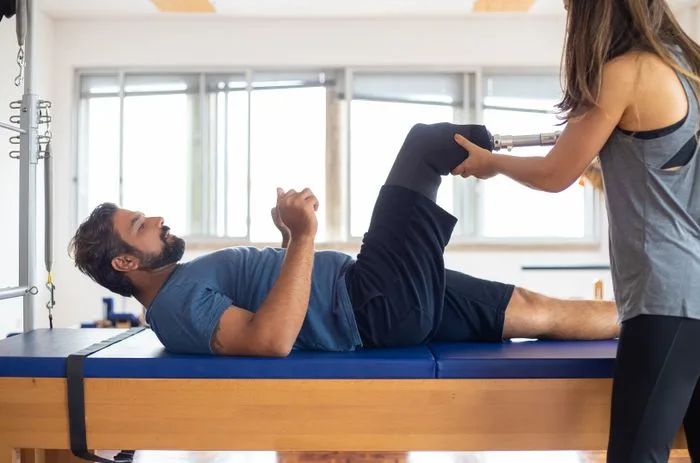
Foot drop is difficulty lifting the front of the foot and ankle. People often notice they trip, drag their toes or lift the knee higher than usual to clear the ground, which gives a distinctive “steppage” walk.
It is a sign of a problem rather than a condition on its own. It can come from irritation or compression of a nerve in the lower back, injury to the nerve near the outside of the knee, or from conditions affecting the brain or spinal cord, such as stroke. A doctor needs to work out which.
Once the cause is known, physiotherapy helps by strengthening muscles that still work, protecting the ankle, advising on supports and training you to walk more safely and with less effort.
We start by asking when the problem began, whether it came on suddenly, and whether a doctor has examined you or arranged tests. We also ask about falls, back pain and bladder or bowel changes. Then we look at your lower back, leg, foot and the way you walk.
We work towards safer, easier walking and better strength, and we do not promise a particular recovery because it depends on the cause.
An ankle-foot orthosis (AFO) or a similar support can hold the foot up and make walking safer. We advise on what may suit you and how to use it.
Graded exercises for the muscles that lift the foot and for the hips, thighs and calves, which help with walking.
Practice stepping, turning and using stairs, with advice on aids such as a stick if appropriate.
Gentle stretching and movement to prevent stiffness while the muscles recover.
Balance exercises and home advice to lower the chance of falls, such as clearing floors, lighting and footwear.
If a back or nerve problem is part of the picture, we address it as part of your plan, in line with medical advice.
Physiotherapy suits people with foot drop whose cause has been evaluated, or is being evaluated, by a doctor. We make no promises about how much recovery to expect, because that depends on the cause. We will always tell you if you need further medical review.
Common causes include pressure on a nerve at the knee, irritation of a nerve in the lower back, and conditions of the brain or spinal cord. A doctor needs to find the cause.
The cause decides the treatment, and some causes need urgent care. Tests such as scans or nerve studies are arranged by a doctor.
A brace or ankle-foot orthosis often helps with safer walking, particularly if recovery is slow. We can advise whether you may benefit and what type.
It depends on the cause and how much the nerve has been affected. Some people recover well and others do not fully. We cannot promise a result, and we monitor your progress.
If you are tripping or have had falls, it may not be safe. We assess your walking and advise on supports, aids and the home environment.
Keep floors clear, use good lighting, wear supportive shoes, and take care on stairs. We go through your home and routines and suggest changes.
Gentle stretching helps prevent the calf and ankle from tightening while the foot muscles are weak. We will show you how, and how often.
Your physiotherapist
Dr. Akshay Bandekar is the founder of The Posture Perfect Physiotherapy Clinic.
Qualifications: BPTh, MIAP, COMT
Advanced training: Visceral Manipulation (USA), Fascial Manipulation (Italy), Craniosacral Therapy (USA)
Meet the teamBook an assessment at our Opera House clinic and we will plan your care together.
This website provides general information, not a diagnosis or personal medical advice. A qualified healthcare professional should assess your symptoms and advise on suitable care. Seek urgent medical attention for sudden weakness, loss of bladder or bowel control, chest pain, or other severe new symptoms.
From our journal
 Posture
Long hours at a desk do not have to mean a sore neck and tight back. These five everyday habits are the ones we see most, and each has a simple fix.
Read more: 5 desk habits that are hurting your posture Back Pain
Most back pain settles on its own, but not all of it should be left to. Here is how to tell what can wait, what to get checked, and what needs urgent care.
Read more: When should you see a physio for back pain? Neck & Shoulders
Four gentle stretches you can do at your desk in a few minutes to ease a tight neck and shoulders, with simple pointers on how to do them comfortably.
Read more: Simple stretches for stiff neck and shoulders