
5 desk habits that are hurting your posture
Long hours at a desk do not have to mean a sore neck and tight back. These five everyday habits are the ones we see most, and each has a simple fix.
Read more: 5 desk habits that are hurting your postureNerves, balance & movement
Wrist drop is the inability to lift the wrist and fingers, which makes gripping and everyday tasks difficult. The cause must be found by a doctor first, and then physiotherapy can focus on strength, function and protecting the hand while it recovers.
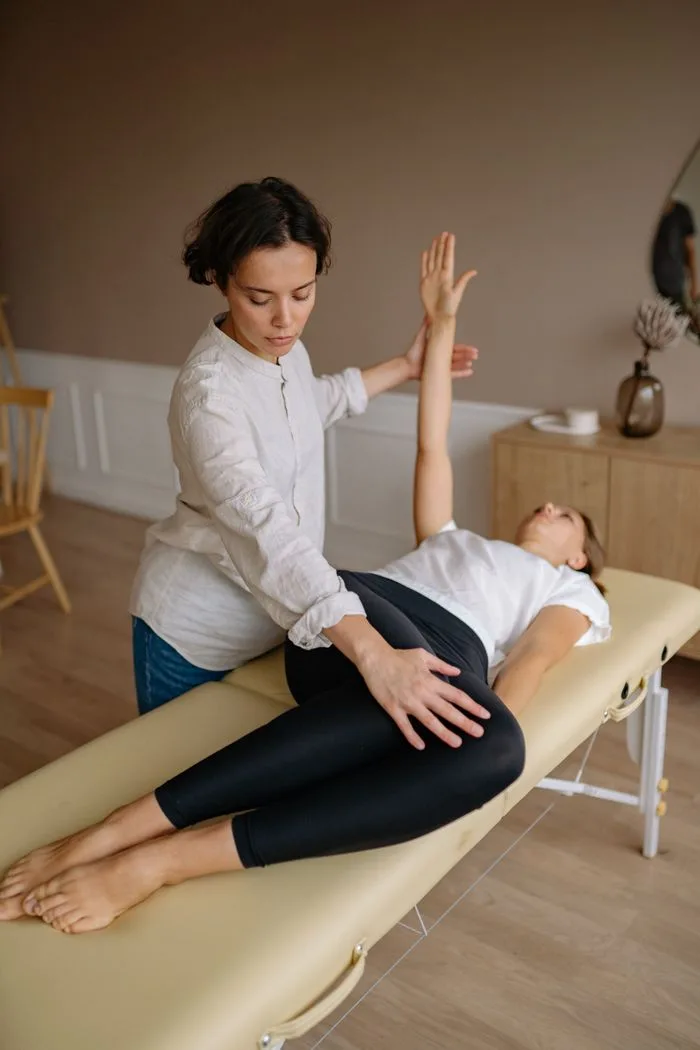
Wrist drop means the muscles that lift the wrist and straighten the fingers are not working, so the hand hangs down. It is a sign that something is affecting the nerves or the brain, not a condition on its own.
The most common cause is injury to the radial nerve, which runs down the arm. This can follow a fracture of the upper arm bone, pressure on the arm (for example from sleeping in an awkward position or prolonged pressure from crutches), or a direct injury. Less often, wrist drop comes from a problem in the neck or from a stroke or other neurological condition.
Because the causes range from mild and short-lived to serious, a doctor needs to examine you and decide on tests. Physiotherapy supports recovery and function once that has happened, or alongside it.
We first ask when the weakness started, how, and whether a doctor has examined you or arranged any tests. Then we look at the arm, wrist and hand, and also the neck and shoulder.
The right plan depends on the cause and on how much function the hand has now. We work towards function, strength and safety, and we do not promise a particular recovery.
A wrist splint can keep the hand in a useful position, protect the tendons from being overstretched and make gripping easier. We advise on what type may suit you.
Gentle movement of the wrist, fingers and thumb to prevent stiffness while the muscles recover.
Graded exercises for the muscles that are working and, as nerve recovery allows, for those that are returning.
Practising everyday tasks and learning ways to do them with a splint or with the hand working differently.
Advice on protecting numb areas from injury and on managing swelling in the hand.
If the neck or shoulder is part of the problem, we address it as part of your plan.
Physiotherapy suits people with wrist drop whose cause has been evaluated, or is being evaluated, by a doctor. We make no promises about how much recovery to expect, because that depends on the cause and on the nerve involved. We will always tell you if you need further medical review.
Most commonly, injury to or pressure on the radial nerve. Neck problems, fractures, stroke and other conditions can also cause it. A doctor needs to find the cause.
The cause decides the treatment and sometimes needs urgent action. Tests such as nerve studies or scans may be needed, and these are arranged by a doctor.
It depends on the cause and the extent of the nerve injury. Some people recover well and others only partly. We cannot promise an outcome, and we monitor progress and keep your doctor informed.
A splint often helps by holding the wrist in a useful position and protecting the tendons. We advise on the right type and when to use it.
Exercise chosen for your stage is helpful, but too much force or stretching of weak muscles can cause harm. We tailor the plan and tell you what to avoid.
Yes, in ways that are safe. We show you how to use your hand for daily tasks and protect numb areas from injury.
It varies with the cause and the speed of recovery. We review regularly and tell you honestly how things are progressing.
Your physiotherapist
Dr. Akshay Bandekar is the founder of The Posture Perfect Physiotherapy Clinic.
Qualifications: BPTh, MIAP, COMT
Advanced training: Visceral Manipulation (USA), Fascial Manipulation (Italy), Craniosacral Therapy (USA)
Meet the teamBook an assessment at our Opera House clinic and we will plan your care together.
This website provides general information, not a diagnosis or personal medical advice. A qualified healthcare professional should assess your symptoms and advise on suitable care. Seek urgent medical attention for sudden weakness, loss of bladder or bowel control, chest pain, or other severe new symptoms.
From our journal
 Posture
Long hours at a desk do not have to mean a sore neck and tight back. These five everyday habits are the ones we see most, and each has a simple fix.
Read more: 5 desk habits that are hurting your posture Back Pain
Most back pain settles on its own, but not all of it should be left to. Here is how to tell what can wait, what to get checked, and what needs urgent care.
Read more: When should you see a physio for back pain? Neck & Shoulders
Four gentle stretches you can do at your desk in a few minutes to ease a tight neck and shoulders, with simple pointers on how to do them comfortably.
Read more: Simple stretches for stiff neck and shoulders