
5 desk habits that are hurting your posture
Long hours at a desk do not have to mean a sore neck and tight back. These five everyday habits are the ones we see most, and each has a simple fix.
Read more: 5 desk habits that are hurting your postureNerves, balance & movement
Bell’s palsy causes sudden weakness on one side of the face and needs prompt medical assessment first. Once a doctor has seen you, physiotherapy can support the recovery of facial movement alongside medical treatment.
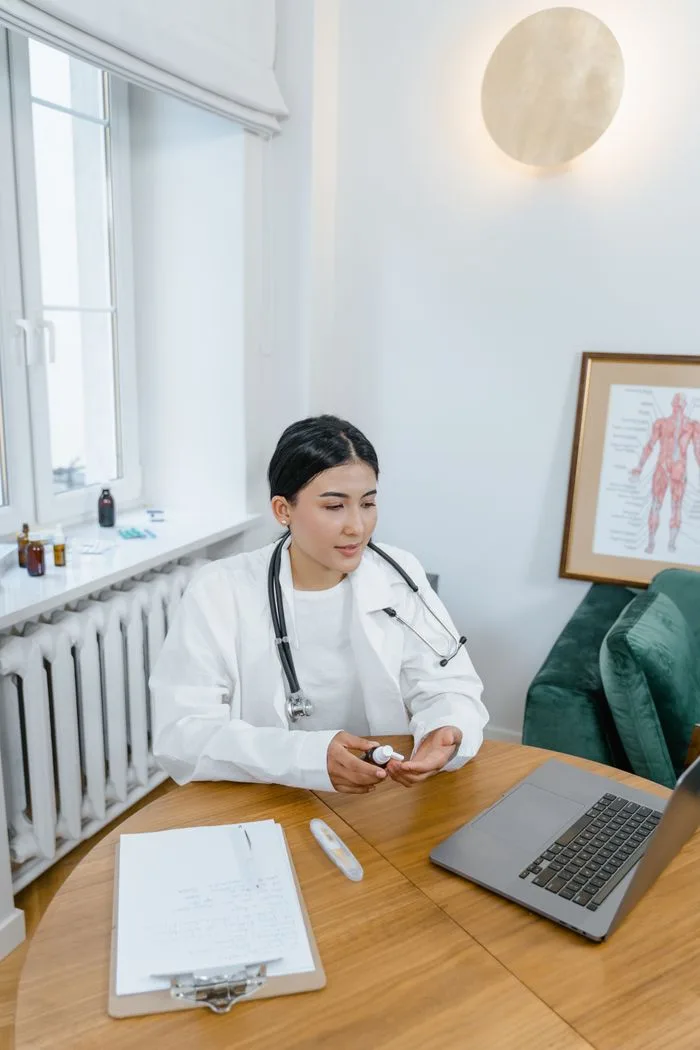
Bell’s palsy, also called facial palsy, is weakness or paralysis of the muscles on one side of the face caused by irritation or swelling of the facial nerve. It usually comes on over a few hours to a couple of days.
The cause is often not clear, though a viral link is suspected in many cases. Because sudden facial weakness can also be a sign of a stroke or another serious condition, a doctor must see you first. Medical treatment started early is often an important part of care.
Many people recover facial movement, though how much and how quickly varies. Physiotherapy does not replace medical care. It supports facial muscle function, helps you protect the eye and guides you away from habits that can cause problems later.
We first ask whether you have been seen by a doctor and when the weakness began. Then we look at your face at rest and while you make a series of movements, in a quiet, unhurried assessment.
Early on, care is gentle and focuses on protection and education. As movement returns, we add more specific exercises.
If the eye does not close fully, it can dry out and become damaged. Your doctor may advise lubricating eye drops by day, ointment and a patch or taping at night, and sunglasses outdoors. We reinforce this and tell you when to seek help, for example if the eye is painful, red or blurred.
Slow, small, symmetrical movements in front of a mirror, introduced at the right stage. We avoid overworking the muscles, which can lead to unwanted tightness.
Light massage and relaxation techniques for the face, jaw and neck, within your comfort, to ease tightness and tension.
Simple strategies, such as chewing on the stronger side and using a straw, to make mealtimes easier.
Some people find a very light-touch approach to the head and neck relaxing during recovery. It is considered only after assessment, and it does not replace medical care.
Read about this techniqueWe track recovery and tell you if things are not progressing as expected, so you can go back to your doctor.
Physiotherapy is for people who have had facial weakness assessed by a doctor and diagnosed as Bell’s palsy or another facial palsy. It supports, and does not replace, medical treatment. We make no promises about how much movement will return, and we will refer you back to a doctor if things are not going as expected.
Sudden facial weakness can be caused by a stroke, which is an emergency. Weakness in the arm or leg, slurred speech, confusion or severe headache point towards a stroke. Please seek emergency care first and do not wait for physiotherapy.
A doctor can confirm the diagnosis, rule out other causes and decide on treatment. Some medical treatments work best when started early, which is why we advise a review as soon as possible, ideally within 72 hours of onset.
Use the lubricating drops, ointment or eye cover that your doctor advises, wear sunglasses outdoors, and avoid dusty settings. Tell a doctor promptly if the eye becomes painful, red or blurry.
Many people recover a good deal of movement, but how much and how quickly differs. We cannot promise a result, and we monitor your progress and keep your doctor informed where needed.
More is not better. Overworking weak muscles can lead to tightness and unwanted movements. We guide you on gentle, controlled exercises timed to your recovery.
After a doctor has seen you. Early on, our role is mainly protection, education and gentle care. We then add exercises as recovery allows.
Your physiotherapist
Dr. Akshay Bandekar is the founder of The Posture Perfect Physiotherapy Clinic.
Qualifications: BPTh, MIAP, COMT
Advanced training: Visceral Manipulation (USA), Fascial Manipulation (Italy), Craniosacral Therapy (USA)
Meet the teamBook an assessment at our Opera House clinic and we will plan your care together.
This website provides general information, not a diagnosis or personal medical advice. A qualified healthcare professional should assess your symptoms and advise on suitable care. Seek urgent medical attention for sudden weakness, loss of bladder or bowel control, chest pain, or other severe new symptoms.
From our journal
 Posture
Long hours at a desk do not have to mean a sore neck and tight back. These five everyday habits are the ones we see most, and each has a simple fix.
Read more: 5 desk habits that are hurting your posture Back Pain
Most back pain settles on its own, but not all of it should be left to. Here is how to tell what can wait, what to get checked, and what needs urgent care.
Read more: When should you see a physio for back pain? Neck & Shoulders
Four gentle stretches you can do at your desk in a few minutes to ease a tight neck and shoulders, with simple pointers on how to do them comfortably.
Read more: Simple stretches for stiff neck and shoulders