
5 desk habits that are hurting your posture
Long hours at a desk do not have to mean a sore neck and tight back. These five everyday habits are the ones we see most, and each has a simple fix.
Read more: 5 desk habits that are hurting your postureBones, joints & muscles
Tennis elbow causes pain on the outer side of the elbow, often when gripping, lifting or typing, and you do not need to play tennis to get it. At our Opera House clinic we find out what is loading the tendon and plan care to settle it and strengthen it.
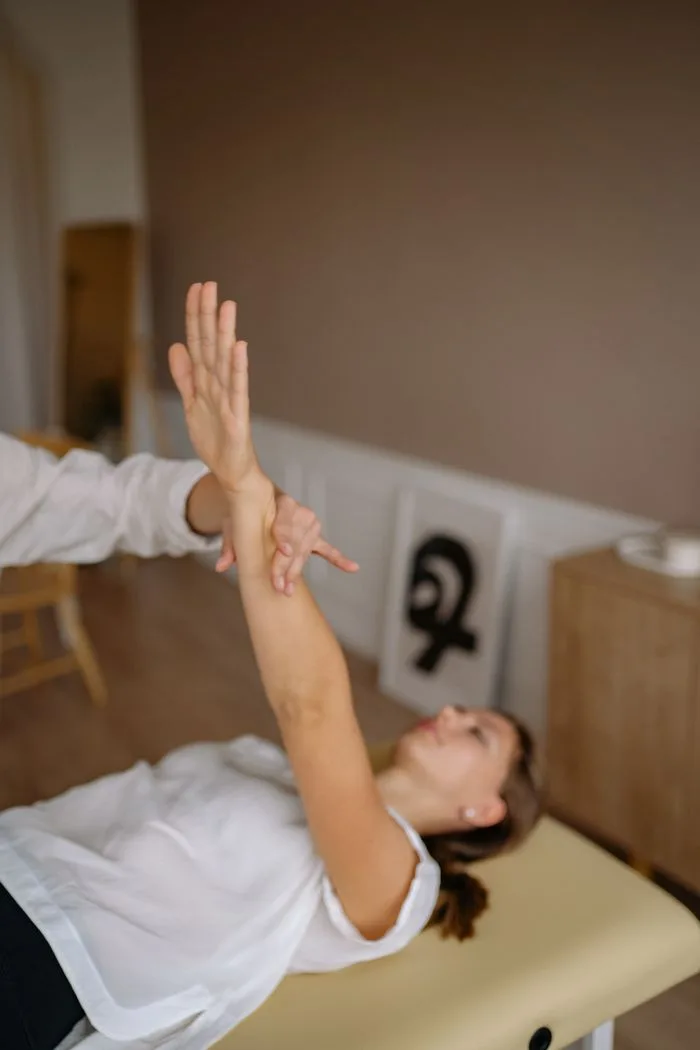
Tennis elbow, or lateral epicondylalgia, is an irritation of the tendons that attach the forearm muscles to the bony bump on the outside of the elbow. These muscles extend the wrist and fingers and help you grip.
It is usually an overload problem rather than a sign of inflammation alone. The tendon becomes sensitive when it is asked to do more than it has been prepared for, for example after a burst of unusual activity or from steady repetitive work.
Tendons respond well to the right amount of load, which is why gradual strengthening is the cornerstone of care, alongside managing the activities that aggravate it.
We ask about your hand use at work, hobbies and sport, and when the pain started. Then we examine the elbow, forearm, wrist, shoulder and neck, because pain at the elbow sometimes comes from elsewhere.
Tendons recover slowly and respond to load, so plans focus on adjusting what aggravates the elbow while gradually rebuilding strength.
Finding ways to reduce the repetitive load on the tendon, such as changing grip, tools or breaks, without stopping the arm altogether.
Graded strengthening of the wrist and forearm muscles, advanced as the tendon tolerates more.
Soft-tissue techniques to the forearm and mobilisation of the elbow, wrist and neck where helpful.
If assessment shows fascial tightness along the forearm and arm is adding to the load on the tendon, it may be used as one part of your plan.
Read about this techniqueAdvice on grip size, racquet or tool choice, and whether a brace or strap might help short term.
A staged plan to get back to your sport, gym work or job tasks while keeping the elbow comfortable.
Physiotherapy suits people with outer elbow pain from repetitive hand use, sport or an unaccustomed burst of activity. We make no promises of cure, and recovery is often gradual. We will tell you if your symptoms need a doctor’s attention or tests.
No. Most people who develop it do not play tennis. It is linked with any repetitive gripping or wrist activity, including typing, using tools, cooking and carrying.
Resting completely can leave the tendon weaker. We usually advise reducing the activities that sharply aggravate it while keeping the arm moving and strengthening it gradually.
Some people find a strap helps with pain during activities, though it does not fix the underlying cause. We can advise whether it might suit you.
Tendons have a limited blood supply and adapt slowly to load. Gradual strengthening works with this process. We cannot promise a timeline, but we monitor progress and adjust the plan.
It was once thought to be mainly inflammatory, but current understanding sees it as more of a tendon overload problem. This is why exercise-based care is central.
Usually yes, with changes. We look at your keyboard, mouse and desk setup, suggest micro-breaks and adjust your grip and posture where needed.
Many people improve with exercise-based physiotherapy. If your doctor is considering medical options, we work alongside them rather than in place of them.
Your physiotherapist
Dr. Akshay Bandekar is the founder of The Posture Perfect Physiotherapy Clinic.
Qualifications: BPTh, MIAP, COMT
Advanced training: Visceral Manipulation (USA), Fascial Manipulation (Italy), Craniosacral Therapy (USA)
Meet the teamBook an assessment at our Opera House clinic and we will plan your care together.
This website provides general information, not a diagnosis or personal medical advice. A qualified healthcare professional should assess your symptoms and advise on suitable care. Seek urgent medical attention for sudden weakness, loss of bladder or bowel control, chest pain, or other severe new symptoms.
From our journal
 Posture
Long hours at a desk do not have to mean a sore neck and tight back. These five everyday habits are the ones we see most, and each has a simple fix.
Read more: 5 desk habits that are hurting your posture Back Pain
Most back pain settles on its own, but not all of it should be left to. Here is how to tell what can wait, what to get checked, and what needs urgent care.
Read more: When should you see a physio for back pain? Neck & Shoulders
Four gentle stretches you can do at your desk in a few minutes to ease a tight neck and shoulders, with simple pointers on how to do them comfortably.
Read more: Simple stretches for stiff neck and shoulders